


First Half 2016 Outlook of Nigeria’s Real Estate Industry
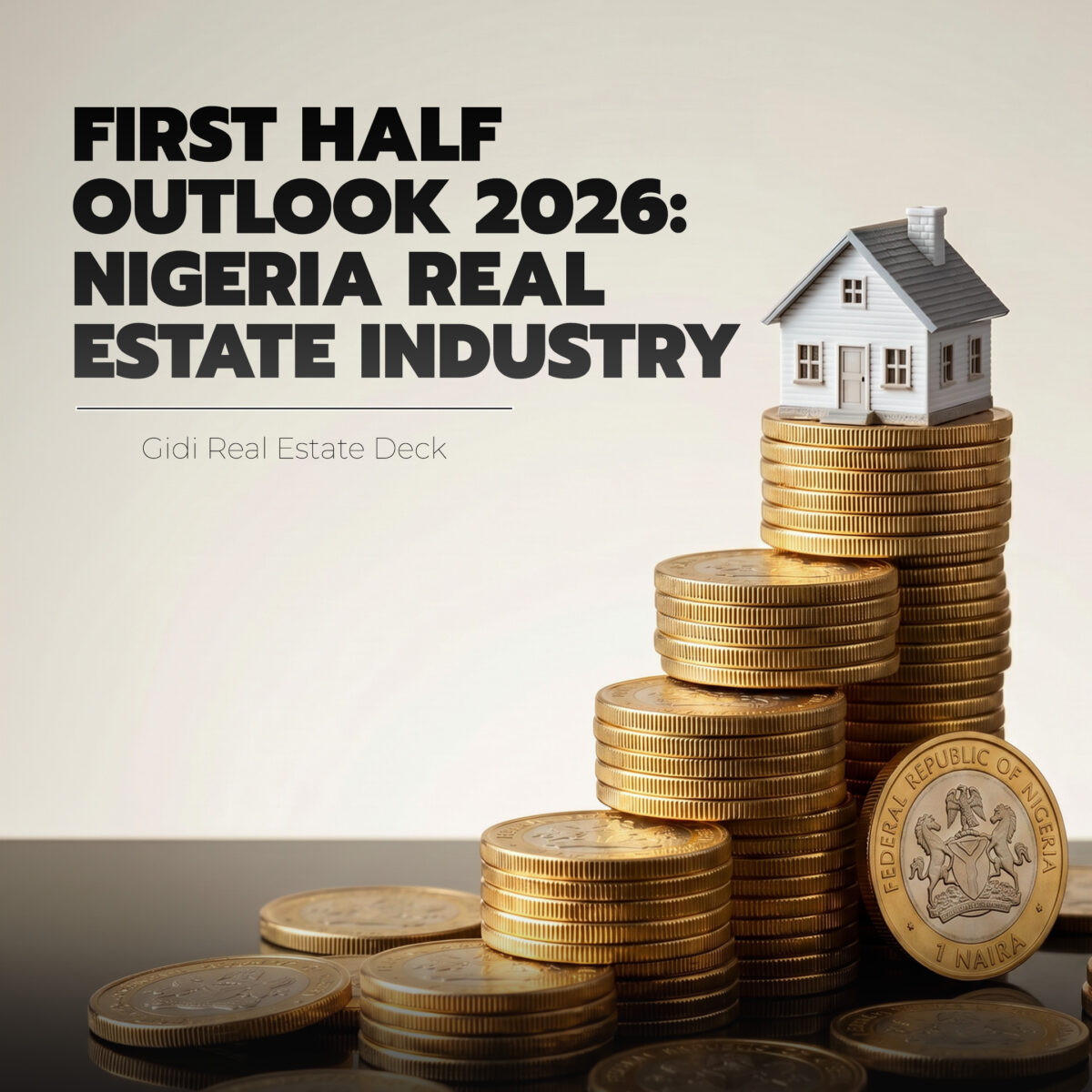
The first half of 2026 paints a picture of a Nigerian real estate industry that remains resilient despite economic pressures. While inflation, financing constraints, and rising construction costs continue to challenge developers and investors, the sector has demonstrated an ability to adapt, reposition, and identify new growth opportunities.
The defining characteristic of the market in H1 2026 has been selective growth rather than broad-based expansion. Demand remains strong across several segments of the industry, but capital has become more cautious, forcing investors and developers to focus on projects with clear fundamentals, strong locations, and proven demand drivers.
One of the most significant themes shaping the industry is the impact of financing and construction costs. High interest rates, limited access to affordable capital, and sustained inflationary pressures have increased the cost of project delivery across the country.
Developers are becoming more disciplined in project selection, relying more heavily on equity partnerships, joint ventures, and private capital rather than conventional debt financing. This shift has made financial structuring a critical determinant of project success.
At the same time, infrastructure-led development has emerged as one of the strongest growth drivers within the industry. Major investments in transportation, logistics, industrial facilities, and digital infrastructure continue to create new real estate opportunities.
The growth of industrial corridors, logistics hubs, port infrastructure, and data centres is reshaping demand patterns and influencing where investors are directing capital. Rather than viewing real estate as a standalone asset class, investors are increasingly positioning around infrastructure projects that stimulate long-term economic activity and population movement.
The residential sector remains the backbone of Nigeria’s real estate market. The country’s housing deficit continues to sustain demand, particularly within the low- and middle-income segments. While affordability remains a challenge for many Nigerians, the demand for quality housing significantly outweighs supply. This imbalance continues to create opportunities for developers capable of delivering well-priced, properly titled, and strategically located residential projects.
However, the market is becoming increasingly segmented. Luxury developments continue to face slower absorption rates, while affordable and mid-market housing products are attracting stronger demand. Buyers and investors are placing greater emphasis on value, accessibility, and long-term utility rather than prestige alone.
As a result, developers are increasingly focusing on projects that address practical housing needs and align with prevailing market realities.
Commercial real estate presents a mixed outlook. While traditional office developments continue to face challenges in some locations due to changing occupancy patterns and growing supply, retail and mixed-use developments in strategic growth corridors continue to attract interest.
Investors are showing greater preference for assets that combine multiple uses and generate diversified income streams. This trend reflects a broader market shift toward flexibility and risk management.
Policy and regulation have also remained key considerations throughout the first half of the year. Issues surrounding land administration, title documentation, planning approvals, taxation, and tenancy regulations continue to influence investment decisions.
Investors are becoming increasingly cautious about compliance and legal certainty, recognizing that title security and regulatory clarity are as important as location when evaluating opportunities.
Looking ahead to the second half of 2026, the outlook remains cautiously optimistic. Demand fundamentals remain strong, infrastructure investment continues to expand, and housing shortages persist across major urban centres.
Nevertheless, developers and investors must navigate a market characterized by high delivery costs, selective capital allocation, and evolving regulatory conditions.
Ultimately, the first half of 2026 confirms that Nigeria’s real estate industry remains a sector of opportunity, but success increasingly belongs to those who combine strategic positioning, financial discipline, infrastructure alignment, and a clear understanding of end-user demand.
The market is no longer rewarding speculation alone; it is rewarding execution, affordability, and long-term value creation.